


Yandex Browser with Alice AI
Direct Cursus Computer Systems Trading LLC
I used Yandex Browser with Alice AI as the kind of browser that can quietly become a shared household tool. It is free, aimed at everyone, and sits in the personalization category, but its practical value is less about changing the look of a phone and more about making everyday browsing feel quicker and more conversational. I found myself thinking about it differently on a shared device: not simply as another way to open websites, but as a place where different people may search, read, watch, and ask for help during the same day.
That shared-device angle matters. A browser can hold a mixture of school searches, shopping pages, travel research, personal questions, and entertainment. The useful question is not whether Yandex Browser with Alice AI has a long list of functions. It is whether each person can use it comfortably without confusing someone else’s browsing habits with their own. My answer is generally positive, with an important condition: it works best when household members understand which parts of the experience are personal and which parts belong to the device itself.
How it feels when several people use one device
In a typical home, one person may use a phone to find a recipe, another may check directions, and a child may open a page for homework or a video. With this browser, the main advantage is the low effort involved in moving between those tasks. Voice search can be handy when someone is cooking or carrying something, while data compression is useful when a connection is slow or mobile data needs to be used carefully. Those are small conveniences, but they become noticeable when the browser is opened repeatedly throughout the day.
Related News

A realistic example is a shared tablet in the kitchen. I might ask Alice to help locate information while preparing dinner, then another family member could search for a product, and later a child could open a learning page. The browser does not need to be treated like a complicated household system; it simply needs sensible habits around tabs, history, and accounts. Closing finished pages and avoiding the assumption that every open tab belongs to the current user prevents much of the confusion that shared devices create.
The interface feels designed for quick access rather than a long setup ritual. I could search by typing, use voice input when that was more convenient, and continue browsing in the ordinary way when I wanted more control. Alice AI adds a more natural route for questions, but I would not use a conversational answer as the only authority for medical, financial, legal, or safety decisions. It is useful for getting started, collecting ideas, or finding a direction; important decisions still deserve careful checking.
Related News

Why WhatsApp Messenger Still Makes Everyday Communication Feel Easy

Jurassic World: The Game Is the Better Dino Tycoon for Strategic Players

Threads in Real Life: Who Should Join, Lurk, or Leave

How SHEIN Turned Shopping Into an Endless Content Feed

How to Make Fortnite Feel Smarter on Mobile

Should You Switch to Microsoft Outlook on Mobile?
One less obvious benefit of voice search is that it can make the browser more accessible to people who dislike small keyboards or struggle with typing on a phone. It is also helpful for older relatives who are comfortable asking a question aloud but less comfortable navigating several search screens. The trade-off is privacy and accuracy: speaking a query in a room is not the same as typing quietly, and names, addresses, or unusual terms may need to be corrected.
What I would arrange before handing it around
I would begin by deciding whether the device is genuinely shared or whether it is mainly one person’s phone that others occasionally borrow. That distinction affects how carefully I would manage open tabs, saved pages, browsing history, and any signed-in services. A browser can make access convenient, but convenience also means that the next person may encounter whatever the previous person left behind.
For a family tablet, I would create a simple routine: each user closes private pages, signs out of services when appropriate, and avoids saving sensitive information on a device everyone can reach. I would also keep household research in clearly recognizable tabs or bookmarks rather than leaving dozens of unrelated pages open. This is not a special Yandex Browser feature; it is a practical boundary that makes the browser easier to trust.
Gallery
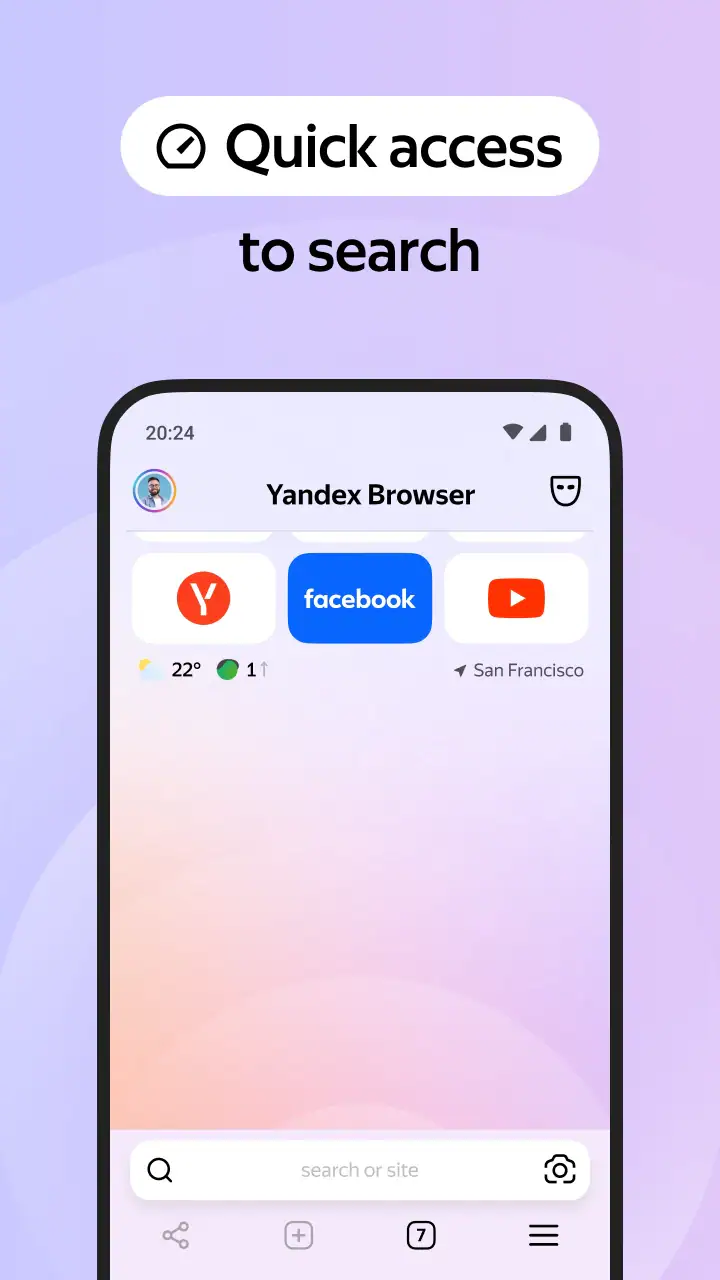
The developer is Direct Cursus Computer Systems Trading LLC, and the app has been available since June 17, 2013. Its long presence and broad adoption make it feel like an established choice rather than an experimental browser, but I still would not install it blindly on every device. I would first check how it fits the household’s existing habits, especially if everyone already depends on another browser’s account synchronization, passwords, or reading list.
One useful setup tip is to test the browser with ordinary, non-sensitive searches before moving personal browsing into it. I would try voice search, open a few familiar pages, check how quickly they load on the household connection, and see whether the interface feels comfortable for the least technical person who will use the device. This short trial reveals more than simply reading a feature list, because the right browser depends heavily on how people actually search.
Data compression can also change the browsing experience in ways that are not immediately obvious. On a weak connection, reducing transferred data may help pages feel more manageable, but some websites may not look exactly as their designers intended. Images can be less convenient to inspect, and a site that already behaves poorly on mobile may feel even less predictable. I see compression as a practical option for constrained connections, not as a setting that should automatically be treated as best for every page.
Keeping personal boundaries clear
Household coordination becomes easier when each person knows what the browser remembers and what they should manage themselves. I would avoid treating a shared browser as a private diary. Search history can reveal surprises, shopping plans, health questions, or work-related research, so a shared device deserves the same basic caution as a shared desk. If a question is sensitive, using a personal device or a separate browsing session is the more sensible choice.
Accounts are another boundary. If one person signs into email, shopping, social media, or a school service and leaves the session open, the browser may become an accidental doorway for the next user. I would not rely on the browser alone to separate household identities. Instead, I would make signing out part of the routine, particularly on a tablet kept in a common room or a phone passed between relatives.
This is where Yandex Browser with Alice AI is better understood as a flexible tool than as a complete family-management solution. It can support shared use, but it does not remove the need for clear account habits. Families looking for detailed child profiles, strict content rules, or extensive supervision should compare it with a browser ecosystem that is specifically built around those controls. I would not choose this app solely because several people need to use one screen.
For coordination, I like the idea of using the browser for neutral household tasks: finding opening hours, comparing public information, checking a recipe, researching a destination, or locating instructions for a device. These activities benefit from quick search and voice input without requiring everyone to share a personal account. When a task becomes personal, I would move it to the relevant person’s own profile, device, or carefully managed session.
A surprisingly useful workflow is to separate “reference” pages from “temporary” pages. Reference pages might include a frequently used service or a household guide, while temporary pages are searches that should disappear once the task is finished. Keeping that distinction in mind reduces tab clutter and makes handoffs smoother. It also prevents the next person from mistaking an old search result for a current household plan.
Where Alice AI helps, and where I stay cautious
Alice AI makes the browser feel more approachable when I do not yet know the exact words needed for a search. Instead of constructing a perfect query, I can describe what I want in ordinary language and use the response as a starting point. That is particularly convenient for broad questions, planning ideas, explanations of unfamiliar terms, and quick comparisons that do not involve high stakes.
In a household, this can help when different users have different levels of technical confidence. Someone who would normally ask another family member how to begin a search may find it easier to speak naturally. I also see value for parents helping with homework: Alice can help clarify a topic or suggest a direction, while the parent and child still need to read the source material and decide whether the explanation is reliable.
The boundary is important. AI-generated responses can sound confident even when a question is ambiguous or the answer needs current verification. I would not let a child treat an answer as automatically correct, and I would not use it as a replacement for a qualified professional. The best household habit is to ask Alice for orientation, then open the underlying pages and discuss what they actually say.
Voice search deserves a similar qualification. It is convenient, but a shared room is not a private space. I would avoid speaking passwords, personal identification details, private medical information, or anything that another person should not overhear. For a child, I would explain that a spoken request is still a real search and should be phrased with the same care as a typed one.
Another trade-off is that conversational assistance can encourage people to stop exploring. A traditional search page shows several possible directions, while an assistant-style response may make one route feel sufficient. I prefer using Alice when I need a starting point, but I switch to ordinary browsing when I want to compare sources, inspect details, or understand disagreement between pages. That combination gives me more control than relying on either mode alone.
Age, trust, and everyday supervision
The Everyone age rating makes the app approachable for a broad household, but an age label is not the same as a complete parenting plan. Children may still encounter unsuitable material through the wider web, misunderstand an AI response, or share more information than they intended. I would introduce the browser alongside a conversation about safe searching, private details, suspicious pages, and asking an adult when something feels confusing.
For younger users, I would prefer supervised use on a common device rather than assuming the browser itself will handle every boundary. I would show them how to close a page, how to recognize when a result is an advertisement or an unfamiliar source, and why they should not enter personal information just because a page asks for it. These lessons are more valuable than simply choosing a browser and walking away.
For teenagers, the conversation changes. They may need legitimate privacy for schoolwork, friendships, and personal interests, while parents may still need a clear agreement about safety. I would avoid turning the browser into a tool for constant inspection unless there is a specific reason. Trust works better when the household agrees on expectations in advance: which accounts may be used on a shared device, what should never be saved there, and when help should be requested.
Older relatives may appreciate the combination of voice search and a familiar browser layout, especially if typing is tiring. I would help them practice with harmless searches first and explain that Alice is an assistant, not a person who knows their private circumstances. The most useful support is often a short list of dependable websites or bookmarks, combined with a reminder to question urgent messages and unexpected requests for payment or personal details.
Trust also includes the developer and the wider service relationship. The app’s popularity is substantial, with over one hundred million installs, an average rating of 4.4, and around 2.9 million ratings. Those figures suggest that many people find it useful, but popularity does not settle whether its approach to accounts, search, or privacy matches a particular family. I would treat the rating as a reason to consider it, not as a substitute for reading settings and making an informed household choice.
How it compares with the usual browser choices
Compared with a standard browser that focuses mainly on tabs, bookmarks, and search, Yandex Browser stands out through the combination of voice search, Alice AI, and data compression. That combination is most appealing if the household values quick spoken queries, help with forming searches, or browsing on a connection where reducing data matters. It feels more assistive than a bare-bones browser.
On the other hand, many people already have a preferred browser tied closely to their phone platform, email account, passwords, history, and synchronized tabs. Switching can create friction even when the new app is capable. If the household’s priority is seamless continuity across several devices and established account tools, the existing default may remain the better choice. I would not move everything merely for a different search experience.
Privacy-minded users should compare the settings and service relationships carefully rather than assuming that a stylish interface tells the whole story. A family that wants minimal account mixing may prefer a browser with especially clear profile separation. A family that wants strong built-in child supervision may be better served by a platform designed around parental management. Yandex Browser can be a good shared browsing tool, but it should not be mistaken for a universal answer to every household concern.
There is also a difference between browsing for answers and browsing for deep research. Alice can reduce the effort needed to begin, while ordinary search and direct source reading remain better for checking details. I would recommend the app to people who want both options in one place, not to someone who dislikes AI assistance or wants every search to remain entirely conventional.
Small habits that make the experience better
I would keep voice search for moments when it genuinely saves effort, such as cooking, driving preparation while parked, or searching for a long title. For private questions, I would type instead or use a personal device. This simple distinction preserves the convenience of speech without making every household search audible to everyone nearby.
I would use compression selectively. It makes more sense when the connection is slow or data use is a concern, but I would turn it off or bypass it when a page depends heavily on image quality, interactive elements, or precise visual layout. If a website behaves strangely, I would first consider whether the page itself or the compression path is responsible before blaming the phone.
I would also avoid leaving Alice-generated explanations as the final word on a shared household note. If the answer affects a purchase, a child’s assignment, travel arrangements, or health, I would open reliable sources and record the conclusion separately. The browser is excellent at reducing the distance between a question and useful information; it is not a guarantee that the first response is the complete answer.
Finally, I would make cleanup part of the handoff. Close tabs that contain personal research, remove temporary downloads if any were created, sign out of accounts that should not remain open, and tell the next person if a page is still in progress. These habits are especially valuable on a family tablet because they prevent accidental exposure without requiring complicated technical management.
My household verdict
Yandex Browser with Alice AI is a strong choice for a household that wants a free browser with a more conversational way to search. I like the practical mix of voice input, data compression, and AI assistance, particularly for quick questions and shared tasks. Its Everyone rating and large user base make it easy to consider for a broad audience, while the developer’s long-running presence gives it the feel of a mature app rather than a short-lived experiment.
My recommendation comes with boundaries. I would install it on a shared device when the family is willing to manage accounts, tabs, and private searches responsibly. I would introduce children to it with supervision and basic web-safety guidance, not assume that an age rating handles every situation, and encourage everyone to verify important AI answers. For a personal phone already organized around another browser’s ecosystem, switching may not be worth the disruption.
The best reason to choose it is not simply that it is popular; it is that it makes ordinary searching more flexible without taking away conventional browsing. If your household often searches aloud, deals with uneven connectivity, or includes people who find typing awkward, it can earn a regular place on the device. If your priority is strict family control, deep account separation, or a completely non-conversational search experience, I would look at alternatives first. Used with clear boundaries, though, it is a capable and approachable browser for shared everyday use.
Yandex Browser with Alice AI is free to try, and its Everyone rating makes it suitable for considering across a mixed-age home. I would begin with one low-risk shared device, establish the household rules before signing into personal services, and give each person a chance to test voice search and ordinary browsing. That approach makes it easier to decide whether the app fits the family’s real routines instead of judging it only by its feature list.
FAQs for Yandex Browser with Alice AI
What makes Yandex Browser with Alice AI different from other browsers?
Yandex Browser stands out due to its integration with Alice AI, a smart assistant that enhances the user experience. It offers real-time assistance for tasks like navigation, answering queries, and managing schedules. Additionally, its Turbo mode accelerates page loading, and it includes robust security features to protect against online threats.
Is Yandex Browser with Alice AI secure to use?
Yes, Yandex Browser prioritizes user security with features like DNSCrypt, which encrypts DNS traffic, and Protect technology that warns against malicious sites. It also includes an active security system to prevent phishing attacks, making it a reliable choice for secure browsing.
Can I use Yandex Browser with Alice AI on multiple devices?
Yandex Browser is available for both Android and iOS, as well as desktop versions for Windows and macOS. By syncing your account, you can access bookmarks, history, and settings across all your devices, ensuring a seamless browsing experience wherever you are.
How does Alice AI enhance my browsing experience?
Alice AI acts as a personal assistant within Yandex Browser, offering voice-activated search, personalized recommendations, and real-time answers to your questions. It can also assist in managing daily tasks, such as setting reminders and checking the weather, making your browsing more interactive and convenient.
Does Yandex Browser with Alice AI support extensions?
Yes, Yandex Browser supports a wide range of extensions to enhance functionality. Users can install extensions from the Chrome Web Store, allowing for customization to suit individual browsing needs. This flexibility makes it easier to tailor the browser to personal preferences.
Pros
- Fast and smooth browsing experience.
- Integrated voice assistant Alice.
- Customizable interface options.
- Built-in ad blocker feature.
- Supports various extensions.
Cons
- Some privacy concerns persist.
- Limited third-party integration.
- Alice AI may struggle with accents.
- Occasional crashes reported.
- Heavy on battery usage.


